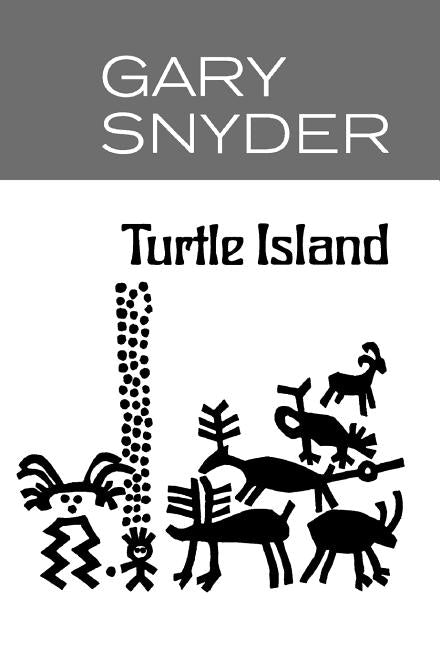
Gary Snyder
Turtle Island
Turtle Island
Couldn't load pickup availability
What does it mean to become native to a place—to cease being invaders and learn to live as true inhabitants of the earth? Gary Snyder's Turtle Island is one of the most influential works of environmental poetry ever written, a Pulitzer Prize-winning collection that fuses Zen Buddhism, deep ecology, and indigenous wisdom into a vision of how we might live in right relationship with the land. Published in 1974, the book takes its title from the Native American name for North America, "based on many creation myths of the people who have been here for millennia," as Snyder writes. The nearly five dozen poems range from the lucid and lyrical to the mytho-biotic and frankly political, but all share a common vision: a rediscovery of this continent and the ways we might stop thinking and acting as newcomers and invaders. This is poetry as ecological practice, offering a path toward becoming native to Turtle Island through mindfulness, respect for indigenous wisdom, and sustainable living.
Snyder is not writing as an observer but as someone who has committed his life to this vision—living in the Sierra Nevada foothills, practicing Zen, raising his family in community, and engaging deeply with environmental activism. The poems ask: How do we heal our relationship with the earth? What does it mean to honor the indigenous peoples and wisdom of this land? How can we live sustainably, mindfully, in harmony with the natural world? Snyder shows us that becoming native is not about appropriation but about deep listening, humility, and the willingness to change how we live. The collection includes "Four Changes," Snyder's seminal manifesto for environmental awareness that remains urgently relevant today.
For readers seeking contemplative wisdom and ecological consciousness, Turtle Island offers a profound meditation on place, practice, and our responsibility to the earth. This is a book for anyone drawn to environmental poetry and deep ecology, who seeks to understand bioregional consciousness and sustainable living, who loves the intersection of Zen Buddhism and ecological activism. It's a reminder that poetry can be a form of environmental practice, and that learning to live rightly on the earth is both a spiritual and political act.
What You'll Discover
- Pulitzer Prize-winning 1974 poetry collection
- Eco-dharma poetry fusing Zen Buddhism, deep ecology, and indigenous wisdom
- Vision for becoming native to Turtle Island (North America)
- Includes "Four Changes," seminal environmental awareness manifesto
- Poetry ranging from lyrical mystical to mytho-biotic and political
Gary Snyder (b. 1930) is a Pulitzer Prize-winning poet, essayist, and environmental activist, widely regarded as one of America's greatest living poets and a founding figure of the deep ecology movement. Turtle Island, published in 1974, won the Pulitzer Prize for Poetry and established Snyder as the preeminent voice of eco-dharma poetry—a poet who shows us how Zen practice, indigenous wisdom, and ecological consciousness can guide us toward right relationship with the earth.
Perfect for: Readers seeking environmental poetry and deep ecology, students of Gary Snyder and eco-dharma literature, those drawn to Zen Buddhism and ecological practice, anyone interested in bioregional consciousness and sustainable living, admirers of indigenous wisdom and Native American spirituality, seekers exploring the intersection of poetry and environmental activism, students of American poetry and the Beat Generation, those interested in back-to-the-land movements and community living, readers who love political and visionary poetry, anyone seeking to become native to place and live in right relationship with the earth.
New Directions hardcover edition. Gary Snyder's Pulitzer Prize-winning masterpiece—offering eco-dharma poetry and the vision of becoming native to Turtle Island through mindfulness, indigenous wisdom, and ecological consciousness.
Share