BooksCloud
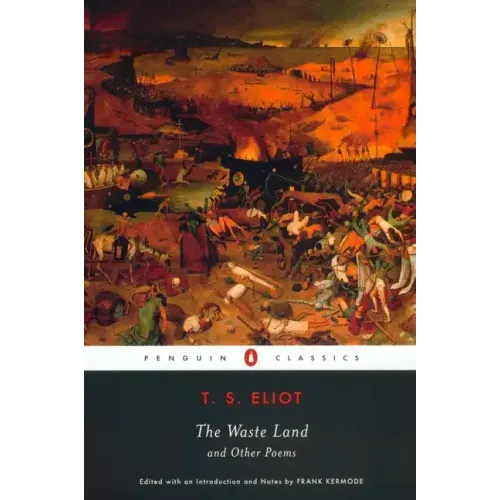
The Waste Land and Other Poems - Paperback
The Waste Land and Other Poems - Paperback
Couldn't load pickup availability
What is the condition of modern consciousness? T.S. Eliot's The Waste Land and Other Poems presents the essential modernist works of the twentieth century's most influential poet—a voice that diagnosed spiritual crisis, cultural fragmentation, and the search for meaning in a secular age. Eliot (1888-1965) revolutionized poetry through radical formal innovation, drawing on myth, literature, and multiple languages to create a new poetic language adequate to modern experience. His work explores spiritual desolation and the longing for renewal, the breakdown of tradition and the search for transcendence, combining intellectual rigor with profound emotional and spiritual depth. Winner of the Nobel Prize in Literature, Eliot shaped modernist poetry and influenced generations of writers with his vision of consciousness, culture, and the possibility of redemption.
This collection centers on The Waste Land (1922), the definitive poem of modern alienation—a fragmented, polyphonic masterpiece built upon the Grail legend, the Fisher King, and ancient fertility myths. Through pastiche, collage, and multiple voices, Eliot unfolds a nightmarish landscape of spiritual emptiness and sexual disorder, while simultaneously questing for renewal and meaning. The volume also includes "The Love Song of J. Alfred Prufrock" (his breakthrough poem of paralysis and self-consciousness), "Portrait of a Lady," "Gerontion" (on aging and historical consciousness), and other essential early works. Eliot's poetry combines high literary allusion with contemporary speech, ancient myth with modern urban life, creating verse that is both deeply personal and culturally diagnostic.
For contemplative readers, Eliot's poetry offers profound meditation on spiritual crisis, tradition, and the search for transcendence. His work asks: How do we find meaning in a fragmented, secular world? What is the relationship between personal and cultural crisis? How do we connect with tradition while living in modernity? What paths lead from spiritual desolation to renewal? Eliot's verse becomes a companion for navigating spiritual emptiness—acknowledging despair while maintaining the possibility of redemption, diagnosing cultural crisis while seeking sources of renewal.
What You'll Discover
Eliot's essential modernist poetry (1888-1965)
The Waste Land—the definitive poem of modern consciousness
"The Love Song of J. Alfred Prufrock" and other breakthrough works
Poetry exploring spiritual crisis, cultural fragmentation, and renewal
Contemplative insights into meaning, tradition, and transcendence
The voice that defined twentieth-century modernist poetry
Thomas Stearns Eliot (1888-1965) was born in St. Louis, moved to England in 1914, and became a British citizen in 1927. He worked as a bank clerk while writing the poetry that would revolutionize modern literature. The Waste Land established him as modernism's central figure, and he later explored Christian faith in works like Ash Wednesday and Four Quartets. He received the Nobel Prize in Literature in 1948. This Penguin Classics edition, edited by Frank Kermode, provides authoritative texts with scholarly introduction.
Perfect for: Readers of modernist poetry and 20th-century literature, students of T.S. Eliot and literary modernism, contemplative readers exploring spiritual crisis and renewal, those interested in myth, tradition, and cultural criticism, anyone drawn to intellectually demanding and spiritually profound poetry, readers of The Waste Land and modernist classics, students of modern consciousness and cultural fragmentation.
Paperback edition. Eliot's essential modernist poems—offering contemplative wisdom on spiritual crisis, cultural fragmentation, and the search for meaning and renewal in the modern world.
Share