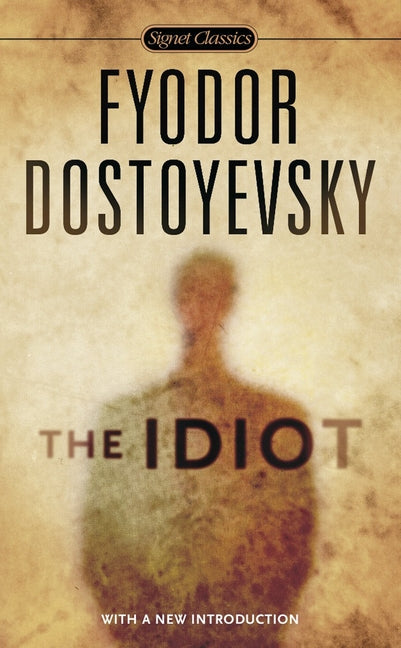
Fyodor Dostoyevsky
The Idiot
The Idiot
Couldn't load pickup availability
Fyodor Dostoevsky's most personal and heartbreaking novel—a profound exploration of goodness, innocence, and beauty in a corrupt world through the story of Prince Myshkin, a Christ-like figure whose compassion and moral purity make him an "idiot" in the eyes of cynical society, creating one of literature's most moving meditations on love, suffering, and the possibility of living with genuine goodness.
Fyodor Dostoevsky (1821-1881) published The Idiot in 1869, creating what he called his attempt to portray "a positively good and beautiful man." Prince Lev Nikolayevich Myshkin returns to Russia from a Swiss sanatorium where he was treated for epilepsy, bringing with him an almost childlike innocence, radical compassion, and faith in the redemptive power of beauty. Yet his goodness and honesty make him vulnerable in a society driven by greed, vanity, and cynicism—earning him the reputation of "the idiot."
What you'll discover:
- Prince Myshkin as a Christ-like figure—embodying compassion, humility, and unconditional love
- The famous declaration: "Beauty will save the world"
- A tragic love triangle involving Myshkin, the passionate Nastasya Filippovna, and the innocent Aglaya
- Exploration of innocence and goodness in a morally corrupt society
- Profound meditations on beauty, suffering, and redemption
- Dostoevsky's own experience with epilepsy reflected in Myshkin's condition
- The conflict between worldly wisdom and spiritual simplicity
- A devastating portrait of how society destroys what is pure and good
Prince Myshkin is one of literature's most memorable and tragic characters. He sees the good in everyone, forgives unconditionally, and loves without judgment—yet these very qualities make him defenseless against manipulation and cruelty. He becomes entangled in a passionate love triangle with Nastasya Filippovna, a beautiful woman damaged by abuse and society's judgment, and Aglaya, a young woman drawn to his purity. His attempts to save Nastasya through love and compassion lead to tragedy, as the world proves unable to accept or sustain genuine goodness.
What makes this novel essential for your contemplative library is its profound exploration of whether Christ-like goodness can survive in the world. Dostoevsky doesn't offer easy answers—Myshkin's goodness is real and beautiful, yet it leads to suffering and destruction. The novel asks: Can innocence exist in a corrupt world? Does beauty truly have redemptive power? What is the relationship between goodness and suffering? Is it possible to love unconditionally without being destroyed?
The novel is deeply personal for Dostoevsky, who shared Myshkin's epilepsy and understood the visionary states it could produce. His portrayal of epileptic seizures and the moments of transcendent clarity before them are based on his own experience. The novel also reflects his struggle to imagine genuine goodness in a world of suffering—Myshkin is his answer, yet the answer is tragic.
Perfect for: Readers of Dostoevsky and Russian literature, those interested in portrayals of Christ-like goodness and innocence, students of philosophical and psychological literature, readers exploring the relationship between beauty and redemption, anyone interested in epilepsy and consciousness, students of tragic literature and moral philosophy, readers of existential and spiritual literature, and contemplative readers seeking profound meditations on love, suffering, and the possibility of living with genuine goodness in a corrupt world.
This mass market paperback edition presents Dostoevsky's most personal novel—a heartbreaking exploration of innocence, beauty, and the tragedy of goodness in a world that cannot sustain it.
Share