Gilbert Ryle
The Concept of Mind
The Concept of Mind
Couldn't load pickup availability
A revolutionary critique of Cartesian dualism—Gilbert Ryle's classic demolition of the mind-body problem and 'the ghost in the machine,' arguing that mental concepts are not about inner states but about dispositions and abilities, fundamentally reshaping how we think about consciousness and behavior.
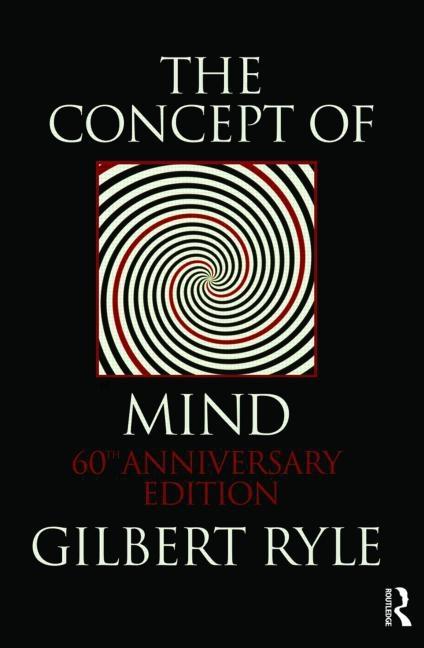
First published in 1949, The Concept of Mind is one of the most important works of twentieth-century philosophy. Gilbert Ryle (1900-1976) launched a devastating attack on the Cartesian view that mind and body are two separate substances—what he mockingly called 'the ghost in the machine.' Through brilliant conceptual analysis and witty examples, Ryle argues that this entire way of thinking about the mind is based on a fundamental category mistake.
What you'll discover:
- The 'ghost in the machine'—Ryle's famous critique of Cartesian dualism
- Category mistakes—how confusing logical types creates philosophical problems
- Mental concepts as dispositions—knowing how vs. knowing that
- Intelligence and thinking—not inner processes but abilities and tendencies
- Emotions and feelings—analyzed as behavioral dispositions, not inner sensations
- The will and volition—challenging the idea of mental acts causing physical actions
- Self-knowledge—how we know our own minds without introspection
- Substantial commentary by Julia Tanney in this sixtieth anniversary edition
Ryle's central argument is that Descartes made a 'category mistake'—treating mental concepts as if they referred to inner, private events when they actually describe dispositions, abilities, and tendencies. When we say someone 'knows French,' we're not describing an inner mental state but a set of abilities (can speak, read, understand French). When we say someone is 'intelligent,' we're describing how they behave, not an inner quality causing that behavior.
This 'behaviorist' approach (though Ryle rejected that label) revolutionized philosophy of mind. Instead of asking 'What is the mind?' or 'How does mind interact with body?', Ryle shows these questions rest on confused concepts. Mental language doesn't describe a separate realm of inner events—it describes patterns of behavior, dispositions to act, and abilities to perform.
Ryle's writing is remarkably clear and often witty. He uses everyday examples—learning to ride a bicycle, watching a cricket match, feeling nervous—to expose the absurdities of Cartesian dualism. His 'sustained piece of analytical hatchet-work' dismantles the mind-body problem not by solving it but by showing it's based on conceptual confusion.
This sixtieth anniversary edition includes substantial commentary by Julia Tanney, placing Ryle's work in historical context and showing its continued relevance to contemporary philosophy of mind and language. It's essential reading for understanding analytic philosophy's approach to mental concepts and the ongoing debates about consciousness, behavior, and the nature of mind.
Perfect for: Students of philosophy of mind and analytic philosophy, readers interested in the mind-body problem, those studying behaviorism and its alternatives, anyone curious about consciousness and mental concepts, students of Wittgenstein and ordinary language philosophy, readers interested in how conceptual analysis solves philosophical problems, and seekers wanting to understand alternatives to Cartesian dualism.
This hardcover sixtieth anniversary edition presents Gilbert Ryle's classic critique of Cartesian dualism with substantial new commentary—essential reading for understanding twentieth-century philosophy of mind.
Share