Edmund Sullivan
Rubaiyat of Omar Khayyam
Rubaiyat of Omar Khayyam
Couldn't load pickup availability
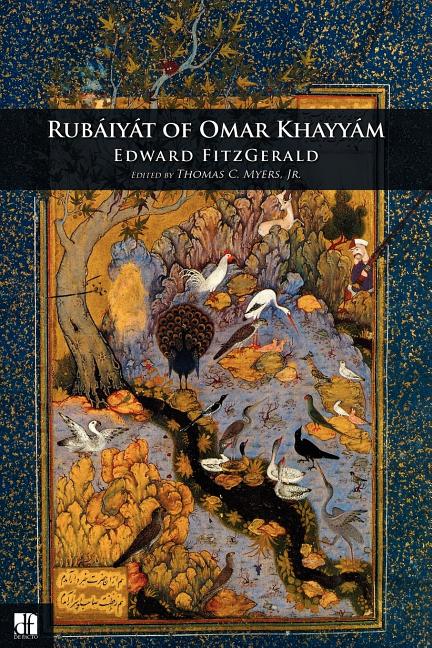
How do we live fully and beautifully in a world where time passes swiftly and nothing lasts forever? The Rubáiyát of Omar Khayyám is one of the most beloved works of Persian poetry and a timeless meditation on mortality, beauty, and the art of living in the present moment. Written by the 11th-century Persian polymath Omar Khayyám—a brilliant mathematician, astronomer, and philosopher—these quatrains (four-line poems) explore the deepest questions of human existence through images of roses, wine, starlit nights, and the fleeting seasons. Edward FitzGerald's 1859 English translation transformed these philosophical verses into a Victorian sensation and introduced the Western world to Khayyám's profound wisdom. Through lyrical, accessible poetry, the Rubáiyát invites readers to contemplate life's brevity, embrace its beauty, and find meaning in the present moment rather than in distant promises or regrets about the past.
The Rubáiyát moves through themes of time, mortality, nature, love, and the mysteries of existence with a voice that is at once melancholic and celebratory. Khayyám reflects on the swift passage of time, the inevitability of death, and the transience of all earthly things—yet rather than despair, he finds beauty in impermanence and urges readers to savor the present: "A Book of Verses underneath the Bough, / A Jug of Wine, a Loaf of Bread—and Thou." His verses question fate, faith, and the nature of the universe while celebrating the simple pleasures of companionship, nature, and beauty. The wine imagery that runs through the poems has been interpreted both literally and as metaphor for spiritual intoxication, divine love, or the fullness of lived experience. What emerges is a philosophy of acceptance, mindfulness, and gratitude for the fleeting gift of life.
For contemplative readers, The Rubáiyát offers profound wisdom on impermanence and presence. The work asks: How do we live meaningfully when life is brief and uncertain? What does it mean to truly inhabit the present moment rather than dwelling in past regrets or future anxieties? How do we find beauty and joy in a world marked by transience and loss? What is the relationship between acceptance and celebration, between acknowledging mortality and embracing life? Khayyám's verses become a guide to mindful living, teaching that wisdom lies not in denying impermanence but in fully experiencing each moment, finding beauty in the fleeting, and living with gratitude and presence.
What You'll Discover
- Omar Khayyám's philosophical quatrains on life, death, time, and beauty
- Edward FitzGerald's beloved 1859 translation that captivated Victorian England
- Meditations on mortality, impermanence, and living in the present moment
- Themes of nature, love, companionship, and the mysteries of existence
- Edmund Sullivan's beautifully stylized romantic illustrations
- All five FitzGerald editions with stanza-by-stanza comparison
- Persian wisdom on acceptance, mindfulness, and the art of living fully
Omar Khayyám (1048-1131) was a Persian polymath whose contributions to mathematics and astronomy were groundbreaking, yet his philosophical poetry has touched hearts across centuries and cultures. Edward FitzGerald's translation, though more interpretive than literal, captured the spirit of Khayyám's wisdom and made it accessible to English-speaking readers. The Rubáiyát became one of the most popular poems in the English language, influencing poets, artists, and seekers worldwide. This edition presents FitzGerald's first edition text with annotations and Edmund Sullivan's wonderfully stylized illustrations, along with all five FitzGerald editions and a stanza-by-stanza comparison showing how the translation evolved over four decades. The Rubáiyát continues to speak to contemporary readers seeking wisdom on impermanence, presence, and the beauty of living fully in each fleeting moment.
Perfect for: Readers of Persian poetry and world literature, those interested in philosophical poetry and contemplative verse, contemplative readers exploring impermanence and mindfulness, anyone drawn to meditations on mortality and the art of living, students of Victorian literature and translation, readers seeking wisdom on presence and gratitude, those who appreciate lyrical, accessible poetry with profound depth, anyone exploring the relationship between beauty and transience.
Paperback edition. Omar Khayyám's timeless Persian poetry—offering profound wisdom on mortality, beauty, and living fully in the present moment through lyrical quatrains that have inspired readers for nearly a millennium.
Share