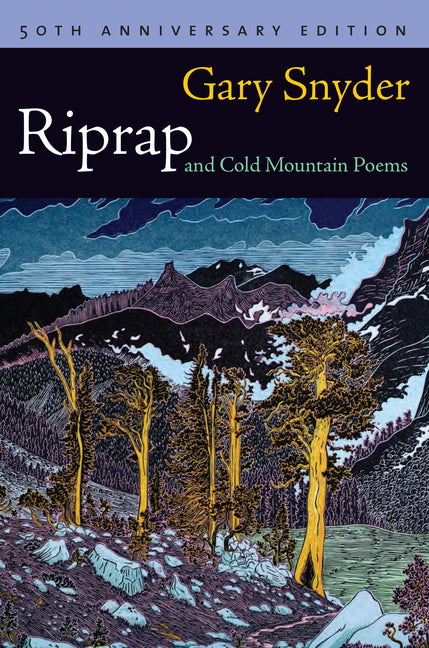
Gary Snyder
Riprap and Cold Mountain Poems
Riprap and Cold Mountain Poems
Couldn't load pickup availability
What does it mean to pay attention—to see a stone, a mountain trail, a day's work with such clarity that the ordinary becomes luminous? Gary Snyder's Riprap and Cold Mountain Poems is one of the essential works of American Zen poetry, a groundbreaking collection that fuses manual labor, wilderness experience, and Buddhist practice into spare, precise verse. First published in Japan in 1959, this book stands "between Tu Fu and Thoreau," as one critic wrote, bridging Chinese poetic tradition and American nature writing with profound simplicity and spare elegance. The collection includes Snyder's own Riprap poems—written while working as a trail crew member and fire lookout in the Cascades—alongside his acclaimed translations of Han Shan's Cold Mountain Poems, perhaps the finest English renderings of that 9th-century Chinese hermit-poet ever made. This is poetry of mindful attention, physical work, and the wild—a book that changed American poetry and remains essential for anyone seeking contemplative wisdom in the natural world.
Snyder is not writing from the study but from the trail, the monastery, the mountain lookout. His poems ask: What does it mean to work with your hands and pay attention? How do we live in right relationship with the earth? What is the connection between Zen practice and wilderness experience? The Riprap poems capture the precise placement of stones on a mountain trail, the rhythm of physical labor, the clarity that comes from solitude and silence. The Cold Mountain translations bring Han Shan's eccentric hermit wisdom to life—poems about living simply, laughing at convention, finding freedom in the mountains. Together they offer a vision of poetry as practice, attention as devotion, and the wild as teacher.
For readers seeking contemplative wisdom, Riprap and Cold Mountain Poems offers a profound meditation on nature, work, and Zen practice in spare, luminous language. This is a book for anyone drawn to nature poetry and wilderness spirituality, who seeks to understand Zen Buddhism through lived experience, who loves the intersection of manual work and contemplative practice. It's a reminder that the sacred is not elsewhere but right here—in stones, trails, mountains, and the precise attention we bring to each moment.
What You'll Discover
- Gary Snyder's groundbreaking first book, published in Japan in 1959
- Spare Zen poetry rooted in trail work, fire lookout experience, and wilderness
- Acclaimed translations of Han Shan's 9th-century Cold Mountain Poems
- Poetry bridging Chinese tradition, American nature writing, and Buddhist practice
- Profound simplicity and spare elegance celebrating mindful attention and the wild
Gary Snyder (b. 1930) is a Pulitzer Prize-winning poet, essayist, and environmental activist, widely regarded as one of America's greatest living poets. A key figure in the Beat Generation and the San Francisco Renaissance, Snyder spent years studying Zen Buddhism in Japanese monasteries and working in the wilderness. Riprap, his first book, established his voice as a poet of nature, work, and dharma practice, and his influence on American poetry, ecology, and spirituality has been profound and enduring.
Perfect for: Readers seeking nature poetry and wilderness spirituality, students of Gary Snyder and Beat Generation literature, those drawn to Zen Buddhism and contemplative practice, anyone interested in Chinese poetry and Han Shan translations, admirers of deep ecology and bioregional consciousness, seekers exploring the intersection of manual work and meditation, students of American poetry and the San Francisco Renaissance, those interested in trail work, fire lookouts, and mountain solitude, readers who love spare, precise, mindful verse, anyone seeking poetry that celebrates the wild and the practice of attention.
Counterpoint paperback edition. Gary Snyder's essential first book—offering spare Zen poetry of wilderness and work alongside acclaimed translations of Han Shan's Cold Mountain hermit wisdom.
Share