Mercelia Rose
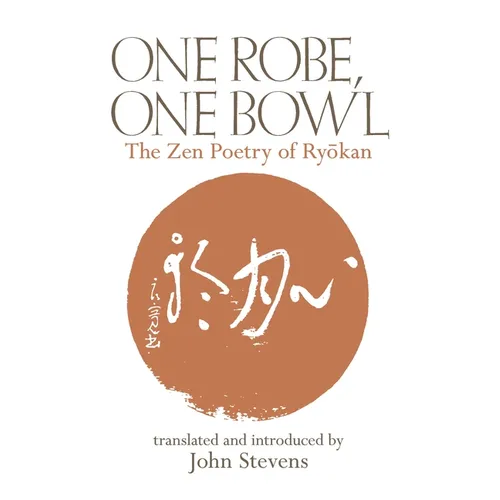
Ryokan: One Robe, One Bowl - The Zen Poetry of Ryokan
Ryokan: One Robe, One Bowl - The Zen Poetry of Ryokan
Couldn't load pickup availability
What does it mean to live with one robe and one bowl? Ryokan's One Robe, One Bowl: The Zen Poetry of Ryokan presents the poetry of the beloved Japanese hermit-monk whose simple life and luminous verse have touched hearts for over two centuries. Ryokan (1758-1831) belongs in the tradition of the great Zen eccentrics of China and Japan—monks who lived outside conventional monasteries, celebrated nature and simplicity, and expressed profound spiritual insight through poetry of deceptive simplicity. His reclusive life and celebration of the natural world bring to mind his younger American contemporary, Thoreau, yet Ryokan's voice is uniquely his own: playful, compassionate, and deeply Zen.
Translated by John Stevens, this collection presents Ryokan's extraordinary poems that capture in a few luminous phrases both the beauty and the pathos of human life. Ryokan lived as a wandering mendicant with only one robe and one begging bowl, writing poetry, playing with children, and finding joy in nature's simplest gifts—moonlight, falling snow, wildflowers. His poetry is that of the mature Zen master, its deceptive simplicity revealing an art that surpasses artifice. The poems reach far beyond time and place to touch the springs of humanity, expressing universal truths about solitude, nature, compassion, and the examined life with clarity and grace.
For contemplative readers, Ryokan's poetry offers profound meditation on simplicity, nature, solitude, and the examined life. His work asks: What does it mean to live with nothing? How do we find joy in simplicity? What is the relationship between solitude and compassion? Ryokan's verse becomes a companion for simple living—teaching contentment with little, joy in nature, playfulness of spirit, and the conviction that true wealth lies in freedom from possessions and pretense.
What You'll Discover
Zen poetry by Ryokan, beloved Japanese hermit-monk
Translated by John Stevens, scholar of Buddhism and Zen
Poems on nature, solitude, simplicity, and compassionate living
Deceptively simple verse revealing profound Zen insight
18th-19th century Japanese poetry in the Zen eccentric tradition
Luminous phrases capturing beauty and pathos of human life
Ryokan (1758-1831) was born into a village headman's family in Japan but renounced worldly life to become a Zen monk. After years of training, he left the monastery to live as a wandering hermit, dwelling in a simple hut and begging for his food. He spent his days writing poetry, practicing calligraphy, playing with village children, and contemplating nature. He owned almost nothing—one robe, one bowl—yet his poetry reveals a life of extraordinary richness and joy. Long beloved in Japan for both his poetry and his character, Ryokan embodies the Zen ideal of living simply, naturally, and compassionately.
Perfect for: Readers of mystical and spiritual poetry, students of Zen Buddhism and Japanese poetry, contemplative readers exploring simplicity and nature, those interested in hermit traditions and simple living, anyone drawn to poetry of deceptive simplicity and profound insight, readers of haiku and Japanese aesthetics, students of Zen eccentrics and wandering monks, admirers of verse that celebrates nature, solitude, and compassionate living with playfulness and grace.
Paperback edition. Ryokan's Zen poetry—offering contemplative wisdom on simplicity, nature, and compassionate living through the luminous, playful voice of Japan's beloved hermit-monk who lived with one robe and one bowl.
Share